Aveva's Role in the Unified Namespace for Industrial IoT
Making Sense of Industrial Data Chaos
Spend any time on a plant floor or in a control room and you will see the same pattern. Alarms blinking, screens flickering, operators juggling half a dozen windows. Each system speaks its own language. The PLCs talk ladder logic, the historians store time series, the MES tracks batches, and the ERP thinks in orders. Getting a single coherent picture of what is happening right now means stitching together data from all these silos by hand, or worse, accepting that you simply cannot see the full picture until after the fact.
This is where the concept of a Unified Namespace becomes more than just a technical term. It is a practical architecture that lets every source of truth publish its data into a common, real-time data layer. Instead of point-to-point integrations that break every time a system updates, a UNS acts as a central nervous system. And if you have been in industrial automation long enough, you have seen several generations of technology try to solve this same problem.
In the late 1990s and early 2000s, OSIsoft's PI System became the gold standard for time-series data collection. It worked well for historians and for trending. But the world has moved on. We now need not just historical playback but live state, edge computing decisions, and cloud integration that feeds digital twin models and asset performance management dashboards. That shift demands a different approach. And this is where Aveva, particularly after its acquisition by Schneider Electric, has been making a serious push to redefine how industrial data flows.
From Historians to Live Data Streams
If you came up through process industries, you probably know PI System from OSIsoft. It was the workhorse for collecting every tag from a DCS or PLC and storing it for later analysis. It did that job well. But the architecture assumed a central historian that polled data on a schedule. Latency was measured in seconds or minutes, not milliseconds. And the historian was the single source of truth, which made it hard to share data with other applications in real time.
The rise of industrial IoT changed the equation. Sensors are cheaper, networks are faster, and the expectation is that data should be available the moment it is generated. Edge computing nodes now preprocess data before sending it to the cloud. Digital twins need to reflect the current state of equipment, not the state from five minutes ago. A historian-centric model cannot keep up.
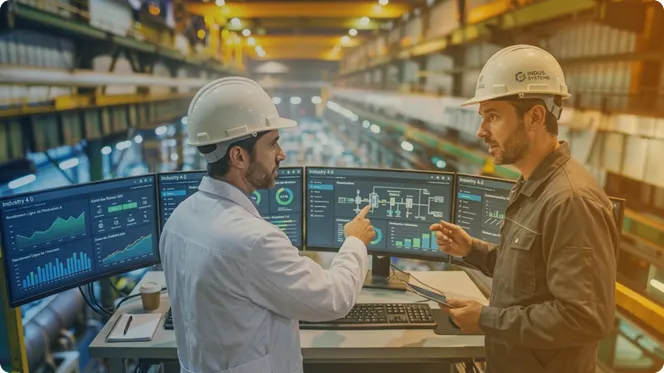
Aveva recognized this shift early. Through its product portfolio, especially Aveva PI System (the evolution of the original OSIsoft PI System under the Aveva brand), it has worked to modernize the historian into a real-time data platform. The idea is that the PI System still ingests and stores data reliably, but it also exposes that data through open standards like OPC UA and MQTT, making it available to any application that needs it, whether that is a cloud analytics service or a local edge node.
The Unified Namespace as the Missing Layer
Still, even a modernized historian is not the same as a Unified Namespace. A UNS is not a central database. It is a publish-subscribe bus where each device or system publishes its current state, and any authorized consumer can subscribe to the topics it cares about. MQTT is the natural protocol for this because it is lightweight, supports many-to-many communication, and works well over unreliable networks. OPC UA adds the semantic modeling layer so that the data has meaning beyond just a numeric value.
In practice, a UNS sits alongside a historian rather than replacing it. The historian gets its data from the UNS bus, stores it for long-term analytics and compliance, and the UNS handles the real-time distribution. This separation of concerns is what makes the architecture scalable. You can add new sensors or machines without touching every integration. And you can build applications like energy management dashboards or supply chain visibility tools that pull live data from the bus without worrying about which historian holds the data.
Schneider Electric, through its ownership of Aveva, has been integrating these ideas into its EcoStruxure platform. The Aveva PI System becomes the historian layer, while the Unified Namespace, often implemented using MQTT brokers and OPC UA servers, provides the real-time data layer. This combination allows companies to move from batch reporting to continuous process optimization, and from manual data reconciliation to automated digital twin updates.
Practical Trade-offs in Real Deployments
I have seen teams try to implement a UNS by simply installing an MQTT broker and telling everyone to publish their data. It rarely works. The hard part is not the technology. It is the data modeling and the governance. Each system needs to agree on what a tag means, what unit it uses, and how often it updates. Without a common semantic model, you end up with a bus full of data that nobody trusts.

This is where Aveva's heritage with OSIsoft helps. The PI System already has a rich asset framework and a well-defined naming convention. By extending that framework into the UNS, you inherit years of best practices for how to name tags, define metadata, and handle quality flags. The Wonderware brand, also part of Aveva's history, brought its own strengths in HMI and visualization. Together, these tools give a starting point for building the data model that the UNS needs.
Another trade-off is latency versus reliability. A historian that stores every sample is safe but slow. A UNS that streams data in real time is fast but can lose messages if the network drops. The practical answer is to use both. Run the UNS for live control and visualization, and let the historian catch up from the bus when the network recovers. The Industrial Internet Consortium has published reference architectures that describe exactly this pattern.
What This Means for Your Plant
If you are running a plant today with a mix of Aveva, PI System, and legacy Wonderware systems, you already have the building blocks for a Unified Namespace. The question is whether you are using them as part of a coherent architecture or as separate point solutions. The shift to a UNS does not require ripping out your existing historian. It requires adding a real-time data layer on top and connecting your systems to it.
Start small. Pick one production line or one process. Set up an MQTT broker and publish the key tags from your Aveva PI System to it. Build a simple dashboard that consumes those tags in real time. See how the latency compares to your current polling approach. Once the team sees the value, expand to include edge computing nodes and cloud integration. The path to a full digital twin or asset performance management system becomes much clearer when the real-time data layer is already in place.

The manufacturing execution system and the supply chain visibility tools can all subscribe to the same bus. Energy management becomes a matter of subscribing to the power tags and running a model, not a project to extract data from five different sources. And when a new sensor arrives, you just publish its data to the bus. No integration project required.
The Bottom Line
Aveva's long history in industrial software gives it a unique vantage point. It understands the historian's role, but it also sees the limits of that approach in a world of industrial IoT and real-time data. The Unified Namespace is not a product you buy. It is an architecture you build. And with the right use of existing tools like the PI System, combined with open protocols like OPC UA and MQTT, that architecture is within reach for any industrial company ready to break down its data silos.